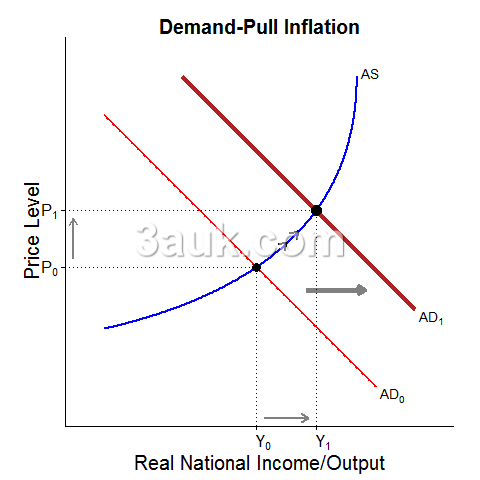
- Demand-pull inflation arises when aggregate demand expands faster than aggregate supply, particularly when the economy is operating near or at full employment. This excess demand forces firms to raise prices as they reach production capacity limits. Higher wages also boost consumers’ spending power. Key triggers include rises in consumer spending, government expenditure, investment, or net exports.
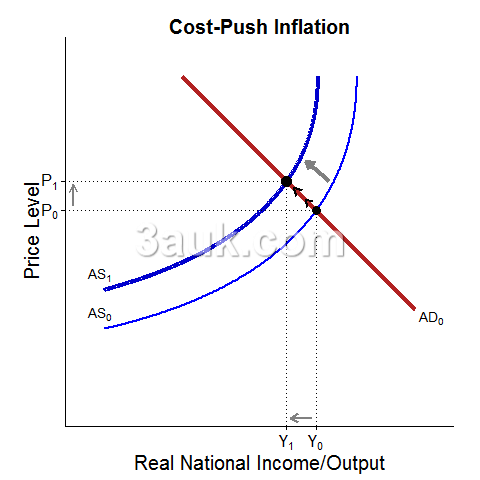
- Cost-push inflation occurs when rising production costs lead firms to increase prices to protect profit margins. Major causes are wage hikes (often from trade union bargaining), higher raw material prices like oil, falling productivity that raises unit costs, and imported inflation due to domestic currency depreciation, which elevates the cost of imported goods.
causes of inflation
« Back to Glossary Index