PED and firm revenue explains how a company’s total revenue (TR) changes when it adjusts the price of its product. This relationship depends on the price elasticity of demand (PED).
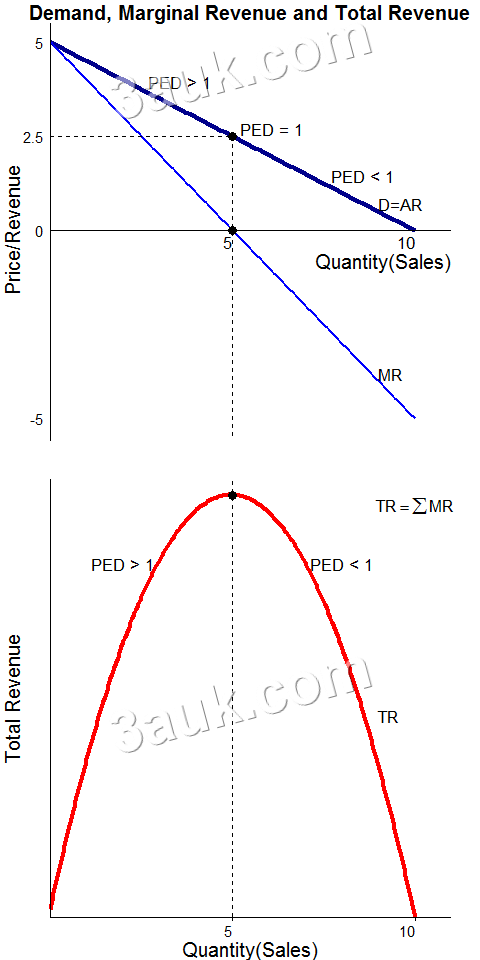
The key relationships are as follows:
- PED > 1 (elastic demand): A small decrease in price leads to a larger increase in the quantity sold, so total revenue rises when price falls.
- PED = 1 (unit elastic): Changing the price does not change total revenue. Revenue is at its maximum at this point.
- PED < 1 (inelastic demand): A price increase leads to a smaller percentage drop in quantity sold, meaning total revenue rises when price increases.
For a firm with normal downward-sloping demand:
- Raising prices reduces total revenue if demand is elastic, but increases total revenue if demand is inelastic.
- Total revenue is highest when PED equals 1.
By understanding PED, businesses can set prices that maximize their total revenue based on how consumers respond to price changes.
Categories: