The law of diminishing returns, also known as the law of variable proportions, states that if you keep adding more of one resource (like labor) while keeping others fixed (like equipment), the additional output produced by each new unit will eventually start to decrease.
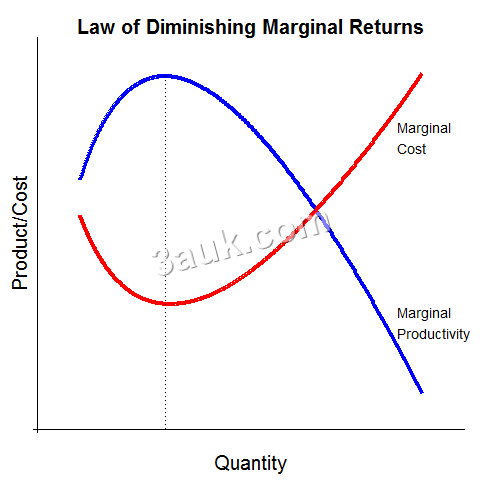
Key features:
- Short-run concept: This rule only applies when at least one factor of production remains fixed.
The three phases of returns:
- Increasing returns: Each extra unit adds more to the total output than the previous one because of better teamwork or specialization.
- Diminishing returns: Each extra unit adds less than the previous one because the fixed resources become a bottleneck or get crowded.
- Negative returns: Adding more units actually reduces the total output because of extreme overcrowding.
This concept is important because it explains why the marginal cost curve is U-shaped. It is different from returns to scale, which is a long-run concept that looks at what happens when all resources are increased at the same time.
Categories: