A monopoly is a market structure where a single company is the only seller of a product. In this market, there are no close substitutes for the product, and other companies find it very difficult to enter and compete.
Key Features:
- One single firm controls the entire market.
- The product sold is unique with no close alternatives.
- High barriers to entry stop new companies from joining the market.
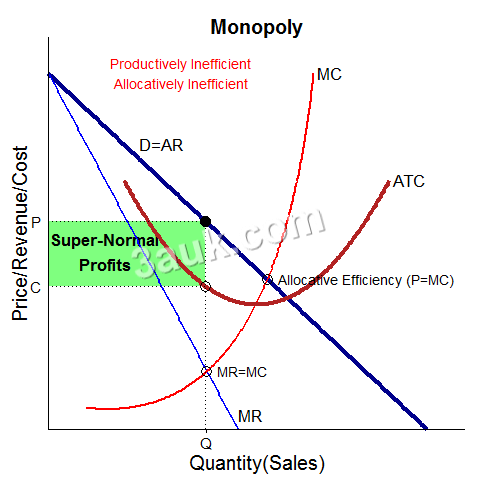
- The company acts as a price maker, meaning it can set its own prices.
- Because of a downward-sloping demand curve, the firm must lower prices if it wants to sell more units.
Reasons for Barriers to Entry:
- Economies of scale: Where it is more efficient for one firm to produce everything (natural monopoly).
- Legal restrictions: Such as patents, government licenses, or exclusive franchises.
- Control of resources: Having exclusive access to essential raw materials.
- Strategic tactics: Such as using low prices to drive out potential competitors.
How Profits are Made:
- The firm maximizes profit by producing where Marginal Revenue (MR) equals Marginal Cost (MC).
- Because of the lack of competition, the company can earn supernormal profits in both the short and long term.
Categories: