Revenue maximisation is a business strategy where a company focuses on generating the highest possible total revenue (TR) instead of focusing on profit. Total revenue is calculated by multiplying the price of a product by the quantity sold (TR = P × Q).
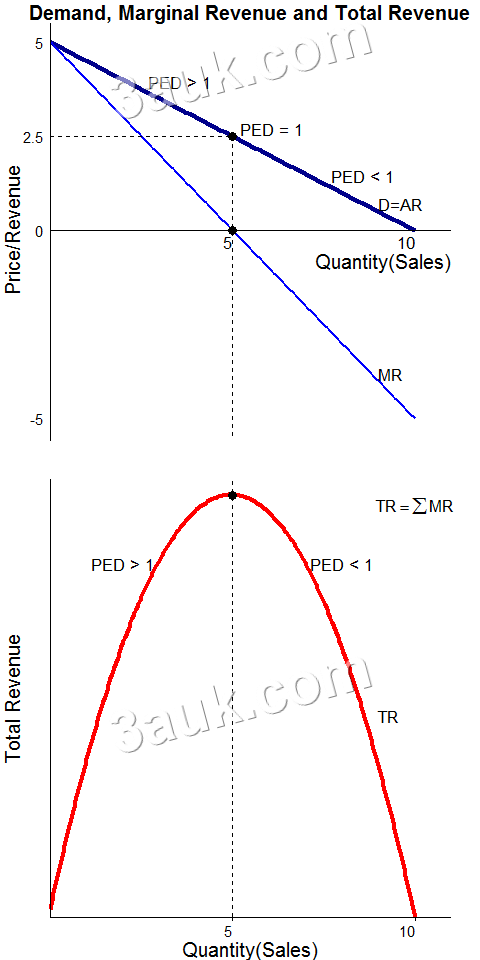
How the model works:
- Revenue is maximised at the point where marginal revenue (MR) equals zero.
- If a firm produces more than this amount, total revenue will decrease because the price must be lowered significantly to sell the extra units.
- This strategy ignores production costs, which is why it differs from profit maximisation (where marginal revenue equals marginal cost).
Revenue maximisation vs. profit maximisation:
- Profit is calculated as Total Revenue minus Total Cost.
- A firm focused on revenue may produce more than a profit-focused firm, even if it results in lower or no profit.
- Revenue maximisation is sales-oriented, while profit maximisation is value-oriented.
Why companies use this strategy:
- Building a brand: Attracting more customers and establishing a strong market presence.
- Attracting investors: High revenue growth can signal future potential to the stock market.
- Managerial goals: Sometimes managers are paid bonuses based on high sales figures.
- Network effects: For digital businesses, having a large user base is often more important than immediate profit.
Categories: